



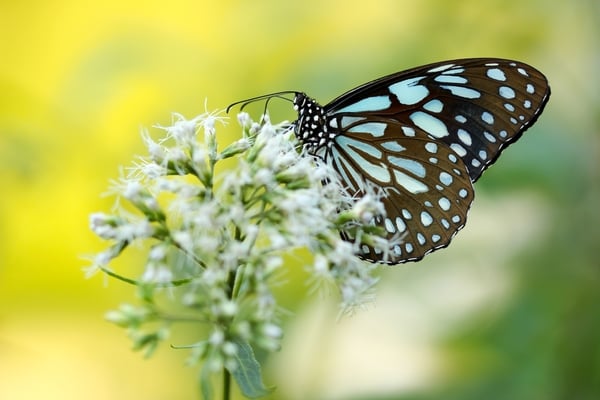
How To Attract Butterflies To Your Garden
Butterflies are a true pleasure to have in the garden. Not only are they enchanting to watch, they’re also highly beneficial for both the plants in your garden and local wild ecosystems. Want to make your garden a butterfly hotspot?

Why attract butterflies?
First, it’s worth taking a moment to appreciate the role butterflies play in the ecosystem. Like bees, butterflies are pollinators, making them central to the reproductive processes of many types of plants. While foraging for flower nectar, these insects transfer pollen from one flower to another. This fertilises the plants, which in turn allows them to form fruits and seeds - something that most gardeners want to see more of!
Butterfly-friendly gardens
Like all animals, butterflies have a basic set of requirements that they seek to satisfy. These include food, water, shelter and reproduction. Butterflies look for sunny, open spaces with a variety of flowering plants for foraging, along with some protected areas (a butterfly house is one way of providing this). Extra tip! - Add shallow water pools and sheltered rocks for sunbathing, and you’ve got yourself a butterfly haven. Keep in mind that insecticides and other pesticides will keep butterflies at bay, so aim to use poison-free methods of keeping away unwanted visitors. Also, remember that caterpillars are the larval form of butterflies and moths - so, while you might not want them chomping through your veggie patch, you’ll probably have to accept hosting some in your garden if you’re keen to attract butterflies.


Australian native plants and butterflies
Many Australian native butterflies and their larvae require specific plants as their primary food source - in fact, some butterflies will lay their eggs on just one species of plant. This means that certain plants are essential for maintaining native butterfly populations, some of which are rare or threatened. That said, there are many native plants that attract butterflies - either specific species or more generally. Some of these are a food source for caterpillars, while others have flowers that provide nectar for butterflies. Here are a few examples.
Grasses and groundcovers
Many native grasses - including lomandras, kangaroo grass and tussock grass - serve as hosts for butterfly larvae. Native violets and bush peas are both versatile groundcovers that provide butterfly food.


Trees, shrubs and vines
Many native trees such as flowering gums, wattles and banksias trees provide food for caterpillars. Hardenbergias (such as Happy Wanderer), leptospermums (such as Lipstick) and many other flowering natives are sought after by butterflies for nectar.


Other flowering plants for butterflies
There are numerous non-native flowers that attract butterflies, and particular planting formations will increase their powers in this regard. In general, massed plantings in blocks of colour is a good approach. Blue, yellow and red flowers are a major drawcard, especially when grouped into bold clusters grouped by colour. Alternatively, try scattering a butterfly-friendly seed mix to create a DIY meadow and butterfly feeding ground.

Start attracting butterflies today
Garden Express stocks a huge range of flowering plants, including natives - perfect for kickstarting your butterfly-friendly garden. Browse our range online to bring colour and life into your garden today.
Share:
Liquid vs. Solid Fertilizer
How Do Trees Help The Environment?