
Crepe Myrtle Growing Guide
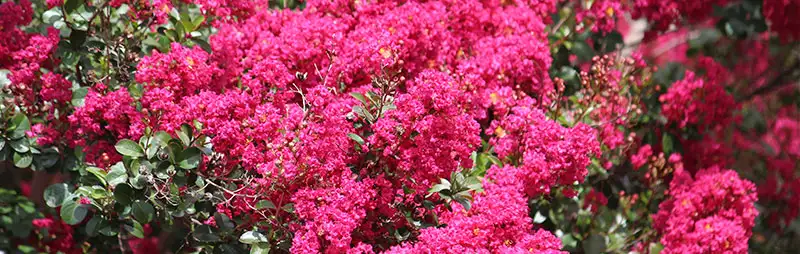
What is Crepe Myrtle?
Crepe Myrtle (Lagerstroemia indica) is a deciduous, vase-shaped tree. They are part of the Lythraceae family and are native to eastern Asia. There are many different types of hybrids which range in sizes and, foliage and flower colours. Crepe Myrtle are deciduous upright trees that usually have dark green foliage which appears at the start of Spring. Other foliage colours can be mid to light green or bronze green. Most varieties have foliage that changes colour during Autumn, with the leaves turning yellow, orange or red (depending on the variety) before falling. Clusters of flowers appear during late Summer which come in a range of colours which include white, pink, red, mauve or purple. The petals are ruffled, with a crepe or paper like texture. Another feature of Crepe Myrtles is their outstanding smooth mottled trunk. They require a full sun position in the garden that has well drained soils. There is an Australian native Crepe Myrtle (Lagerstroemia archeriana), which grows to around 7m tall and has pinkish mauve flowers. Another interesting variety of Crepe Myrtle is the Diamonds in the Dark series. The foliage is dark burgundy and come in a range of colour flowers such as white, red, pink and purple. This tree/shrub is more compact than the other varieties and are best suited to a full sun position in the garden.
Benefits of Growing Crepe Myrtle
Crepe Myrtles are a great small tree for smaller gardens. They come in a range of colours and sizes. They make an excellent specimen tree which can be grown both in the garden or in a large pot. They can be grown as a hedge to line your front yard or used as a border, along a fence line or as a street plant. Crepe Myrtles are bee and bird attracting.
How to Grow Crepe Myrtle
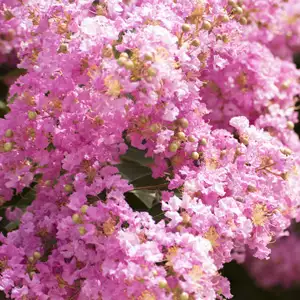
Crepe Myrtle Pink
Climatic Zones
Cool to mild tropical.
Plant Size
Sizes vary.
Crepe Myrtles come in dwarf, medium and tall varieties.
Dwarf Height: 60-75cm, Width: 70cm-1.2m
Medium Height: 3-5m, Width: 3-5m
Tall Height: 8m, Width: 5m
Diamonds In The Dark Height: 2-3m, Width: 1.5-2.5m
When To Plant Crepe Myrtle
The best time to plant crepe myrtles is in late winter to spring, once the risk of heavy frost has passed. This allows the plant to establish its root system during the warmer months ahead.
Container-grown plants can technically be planted at any time of year, but avoid planting in the peak of summer heat if possible, as newly planted specimens will need more frequent watering to establish.
Soil Preparation
Crepe Myrtles prefer a free draining soil but will tolerate a wide range of soils.
How To Plant Crepe Myrtle
Plant in full sun, with the plant crown at soil level. Dig the planting hole twice as wide and to the same depth as the root-ball.
Crepe Myrtle Plant Care
Water in well and keep soil moist until tree is established. Keep well watered through Summer.
Mulch to prevent weeds or grass growing under the tree, and to retain moisture in the soil.
Fertilise when new growth appears with a slow release fertiliser in Spring.
Prune tree when planting to encourage new growth. Prune to maintain shape.
Crepe myrtles can be heavily pruned in Winter to encourage the development of long, arching branches of flowers. However, the downside of this annual pruning is that it creates an ugly, butchered looking plant. Left unpruned, crepe myrtles develop a naturally appealing shape and will flower well regardless.
While growing remove low growth to develop a smooth, attractive trunk.
Powdery mildew is one of the main problems however most of the new hybrids are more resistant. If your plant has powdery mildew one possible way of fixing the problem could be to move the plant into a full sun position first or remove affected branch if possible.
Recommended Crepe Myrtle Varieties
The large variety in flower colours and shape make the Crepe Myrtle a winner.
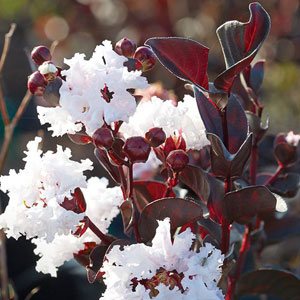
Diamonds In The Dark Blush
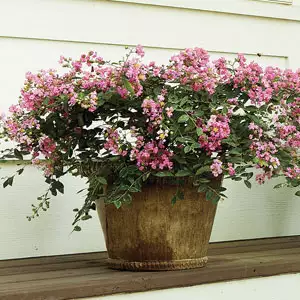
Crepe Myrtle Infinitini Orchid
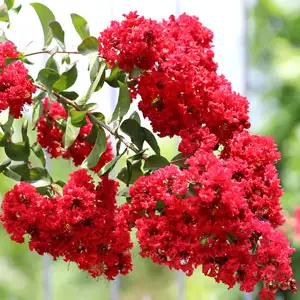
Crepe Myrtle Enduring Summer Red
About These Varieties
Diamonds in the Dark series — standout varieties featuring deep burgundy-black foliage that contrasts dramatically with their flowers. Compact growing to around 2–3 metres, they suit smaller gardens and large containers.
Infinitini series — a dwarf to medium range growing to 60cm–2 metres depending on variety, bred for compact habit and prolific flowering. Ideal for hedging, borders and pots.
Enduring Summer series — vigorous growers with excellent heat and humidity tolerance. Available in red, pink and white, a reliable choice for warmer Australian climates.
Beyond flower colour, consider foliage — many varieties offer spectacular autumn colour in shades of orange, red and gold, extending the ornamental interest well beyond the flowering season.
How to Prune Crepe Myrtle (the right way)
Pruning is one of the most debated topics in crepe myrtle care. The good news: these are forgiving plants — but there is a right way and a wrong way.
The wrong way — ‘crepe murder’: The practice of cutting crepe myrtles back to thick stubs each winter is common but not recommended. It creates an ugly, knobbled framework, makes the plant more prone to disease, and reduces flowering quality over time.
The right way: Crepe myrtles do not need heavy pruning to flower well. If you do want to prune, do so lightly in late winter before new growth begins. Remove any crossing or inward-growing branches, thin out congested growth, and remove seedheads from the previous season. The goal is to maintain a natural, graceful shape.
To encourage a second flush of flowers during the season, remove spent flower clusters as they fade. If you need to control size, choose a naturally smaller variety rather than relying on heavy annual pruning.
Seasonal Care Calendar
Spring: Apply a slow-release fertiliser as new growth emerges. This is the most important feeding of the year. Prune lightly if needed before buds break.
Summer: Water regularly, especially in the first year or two. Remove spent flowers to encourage a second flush. Watch for powdery mildew in humid conditions.
Autumn: Enjoy the autumn foliage display. Begin reducing water as temperatures cool. No fertilising needed from late summer onwards.
Winter: Crepe myrtles are deciduous and will drop their leaves — this is normal. In cooler regions, young plants may benefit from a light mulch around the root zone to protect against hard frosts.
Growing Crepe Myrtle in Pots
Crepe myrtles — particularly dwarf varieties from the Infinitini and Diamonds in the Dark series — grow very well in large containers. Choose a pot at least 40–50cm in diameter with good drainage holes, and use a quality potting mix. Feed with a slow-release fertiliser in spring and water regularly through summer, as pots dry out faster than garden beds. Move pots to a sheltered position if your area experiences heavy frost.
Common Problems
Powdery mildew: White powdery coating on leaves and new shoots, most common in humid conditions or where airflow is restricted. Most modern hybrids have good resistance. If affected, move plants to a more open position and avoid overhead watering.
Aphids: Can cluster on new growth in spring. A strong jet of water or an insecticidal soap spray will control them.
Sooty mould: Black coating on leaves, usually following an aphid or scale infestation. Treat the underlying pest first and the mould will clear.
Poor flowering: Usually caused by too much shade, excess nitrogen fertiliser, or heavy pruning removing the flowering wood.



